

AI SOC:人工知能はセキュリティ運用をどのように変革しているのか
続きを読む
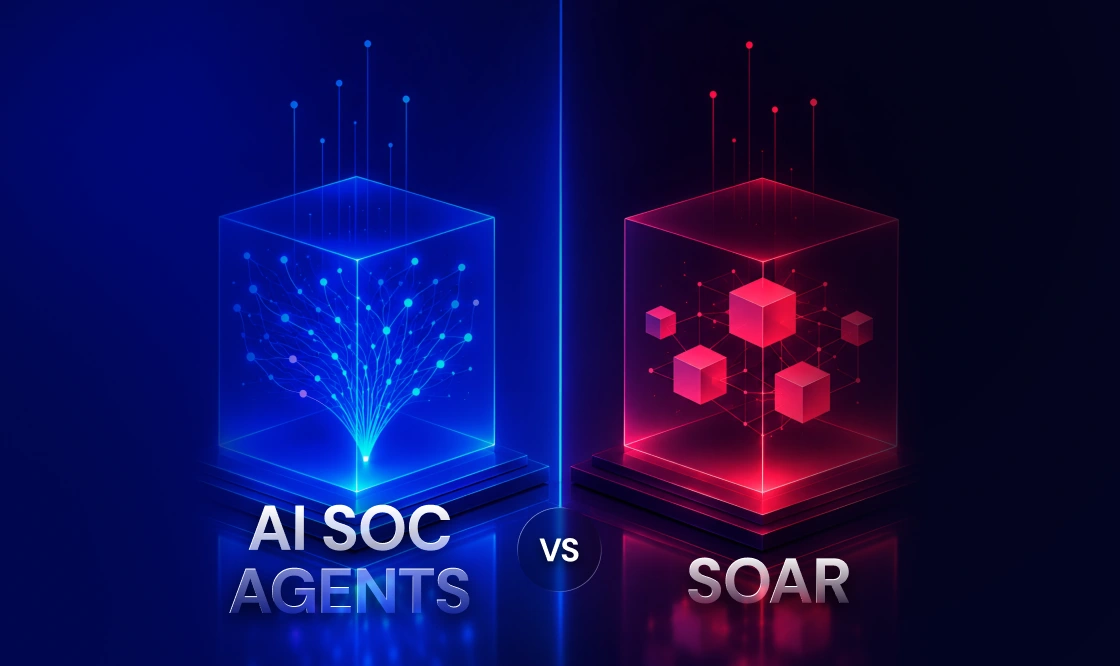
Two claims have dominated security operations (SecOps) marketing for the past two years, and they contradict each other.
Both are wrong, and the gap between them is where a lot of evaluation budget gets spent poorly.
Gartner’s 2024 Hype Cycle placed SOAR at “obsolete before plateau,” which gave the first claim its ammunition. But a category’s market structure and its customer needs are different things, and only one of them died. The rest of this blog follows what the evidence supports, telling the story of what SOAR did, what agents changed, what they didn’t, and the two-layer architecture production deployments keep converging on.
SOAR did one thing exceptionally well: it encoded known procedures into executable workflows. Write down how your team handles a reported phishing email (parse it, detonate attachments, check the URL, search for other recipients, quarantine, notify) and SOAR executed that procedure identically, at machine speed, ten thousand times a day, with a log of every step.
Its virtues were determinism, repeatability, and auditability. The same input produced the same path. You could show an auditor exactly what ran and why.
Its limits were the flip side. Playbooks only handled situations their authors anticipated. Building and maintaining them took engineering effort and structured data flow that most teams underestimated. Gartner’s critique centered on that maintenance burden, plus market consolidation and cost. And a playbook could not exercise judgment. Faced with ambiguity, it branched only on conditions someone had pre-written.
That produced a workload split anyone who has sat through a SOC tooling review will recognize. Teams automated the well-understood, repeatable share of their alert volume and kept drowning in the ambiguous remainder, the alerts that required an analyst to look, think, and decide. Playbooks handled the volume. The investigative middle stayed human.
AI SOC agents address those remaining alerts with a fundamentally different approach than SOAR, not just incremental changes. An agent doesn’t follow a pre-written path; it builds its own. It reads the alert, decides what evidence would confirm or refute it, queries systems for that evidence, revises as results come in, and renders a verdict with written reasoning.
Playbooks encode procedure. Agents approximate judgment.
That is a real capability change, not a rebrand. Deterministic automation could not structurally investigate novel, ambiguous alerts. It is now partially possible. The “just SOAR with an LLM” dismissal does not survive contact with a working deployment.
Judgment comes with a trade. Agents are probabilistic. Run the same investigation twice and you can get different paths and, occasionally, different conclusions. They can be confidently wrong.
An LLM reasoning loop is also the wrong tool for work that was already deterministic. No security leader wants a model improvising a containment sequence, an evidence-preservation step, or a regulator notification chain. Those need to execute exactly, every time, with proof.
This is why the replacement narrative fails. Deterministic execution, enforced process, integration plumbing, and audit did not stop being necessary. They became more necessary, because a probabilistic system now sits in the loop and needs exactly those properties wrapped around it.
要するに: AI SOC agents introduce flexible, probabilistic judgment to investigate complex threats, but they require deterministic, rule-based processes to guarantee reliable, auditable execution.
In production, the two capabilities compose into layers.
Call it agents inside guardrails. The reasoning layer is probabilistic. The permission and execution layer is not. Teams that deploy agents without the second layer are trusting a model’s self-restraint, and a prompt is not a control. Teams that stay pure-SOAR keep paying analysts to do first-pass judgment work that machines can now handle.
The AI SOC architecture question turns into four buying questions, and they separate the market faster than any feature matrix:
That last question is the one buyers skip. Vendors that treat orchestration as legacy end up shipping agents you cannot audit. Vendors that treat agents as a bolt-on ship a summary button. At Swimlane, we kept investing in the execution layer rather than replacing it, because we know that governable autonomy needs both and the deterministic half is far harder to retrofit.
Key Takeaway: Governable autonomy requires a robust, built-in deterministic execution layer rather than a bolted-on wrapper.
The standalone SOAR market died, absorbed into broader platforms, exactly as Gartner described. The discipline did not. Orchestration, deterministic execution, and audit became the substrate that makes agent autonomy governable.
What changed is the division of labor. Machines take the first pass at judgment, and humans govern the machines. The plumbing that enforces the governing rarely makes the demo, and it decides whether any of this survives contact with your auditor.
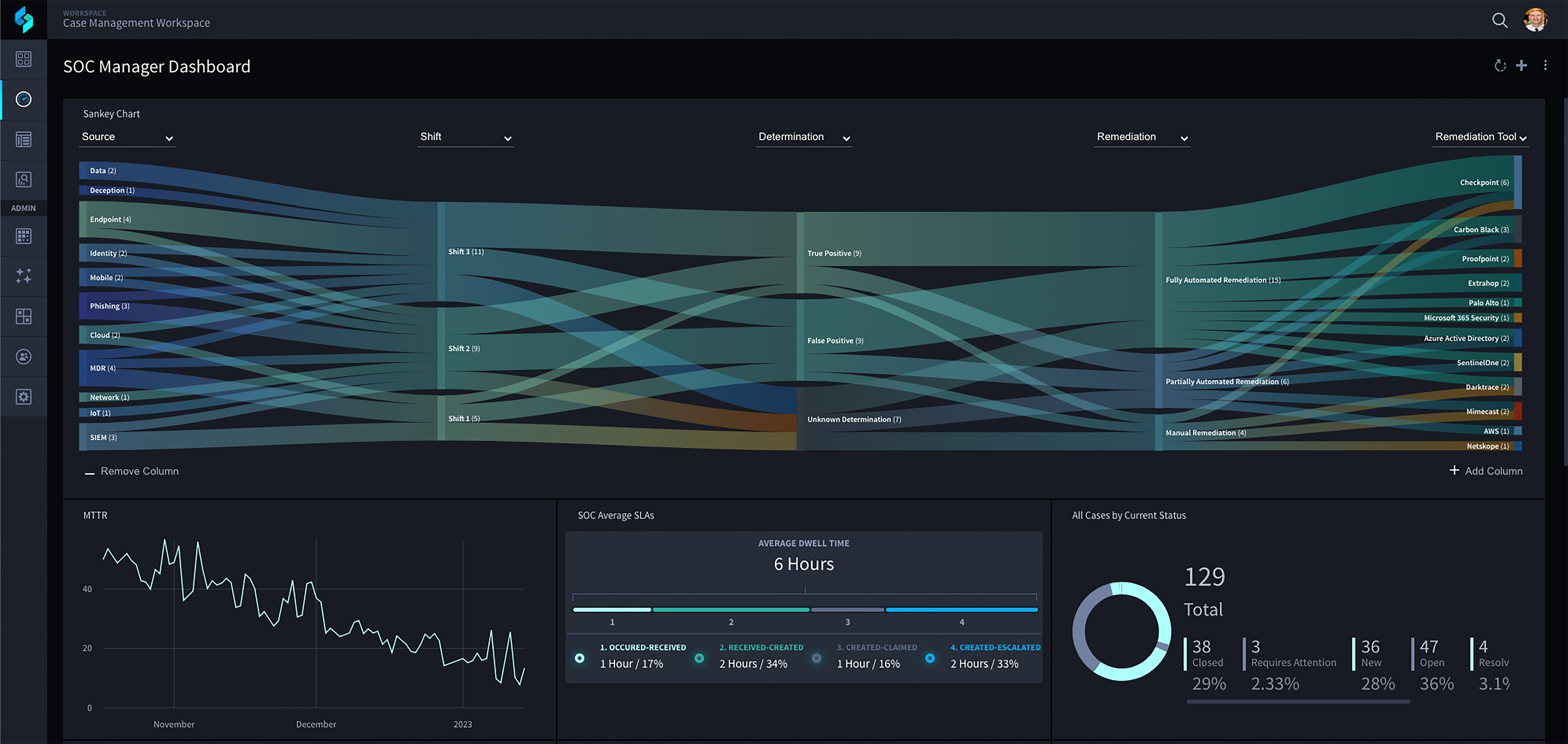
Experience how governable AI SOC agents combine probabilistic reasoning with deterministic execution to automate complex threat investigations securely.

 English English
  Français
 Deutsch
 日本語
日本語
 한국어
한국어
 Português
 Español