


AI SOC 오케스트레이션을 마스터하는 기술
더 읽어보기

AI agents are rapidly becoming the next frontier in cybersecurity. From alert triage and threat intelligence to investigations and incident response, security teams are exploring how AI can help them move faster, reduce analyst workload, and improve outcomes.
The excitement is understandable. Organizations are under constant pressure to do more with less while facing growing volumes of alerts, expanding attack surfaces, and a persistent cybersecurity skills shortage.
But amid the rush to deploy AI agents, many organizations are overlooking a critical question: How will all of these agents work together?
Because deploying AI agents is one challenge. Orchestrating them is another entirely.
Over the last decade, security teams have battled tool sprawl.
Organizations accumulated dozens of security products, each designed to solve a specific problem. While many delivered value individually, they often created operational complexity when combined.
Now, a similar challenge is emerging with AI.
As organizations introduce AI assistants, copilots, autonomous agents, and specialized models, they risk creating a new layer of fragmentation. Without coordination, these technologies can operate in silos, duplicate effort, and generate competing outputs that create more noise than clarity.
The result is what many organizations are beginning to experience as AI sprawl. Instead of simplifying operations, AI can unintentionally add another layer of complexity if it is not introduced with a clear strategy for governance, coordination, and visibility.
At its core, AI agent orchestration is the practice of coordinating AI agents, workflows, and human decision-makers toward a shared objective.
Think of it like an orchestra: An orchestra is not successful because it has the most musicians. It succeeds because every musician understands their role, follows the same score, and contributes to a coordinated performance.
The same principle applies to AI.
Individual agents may excel at specific tasks. But real value emerges when those capabilities work together within a broader operational strategy. Without orchestration, even the most capable agents can become disconnected performers. With orchestration, they become part of a cohesive team.
The conversation around AI often focuses on what agents can do.
Those are important questions. But they are not the questions that will determine long-term success.
The organizations that realize meaningful value from AI will be the ones that can answer bigger questions:
These challenges are not technology problems alone; they are orchestration problems.
Security operations have always been about coordination. Tools, workflows, analysts, and processes must work together to produce meaningful outcomes. AI does not change that reality. In many ways, it makes coordination even more important.
As AI adoption accelerates, the most successful security teams will move beyond simply deploying agents. They will focus on building environments where AI and human expertise operate in harmony, with the visibility, governance, and flexibility required to adapt as threats evolve.
The future belongs not to organizations with the most AI agents. It belongs to organizations that know how to orchestrate them.
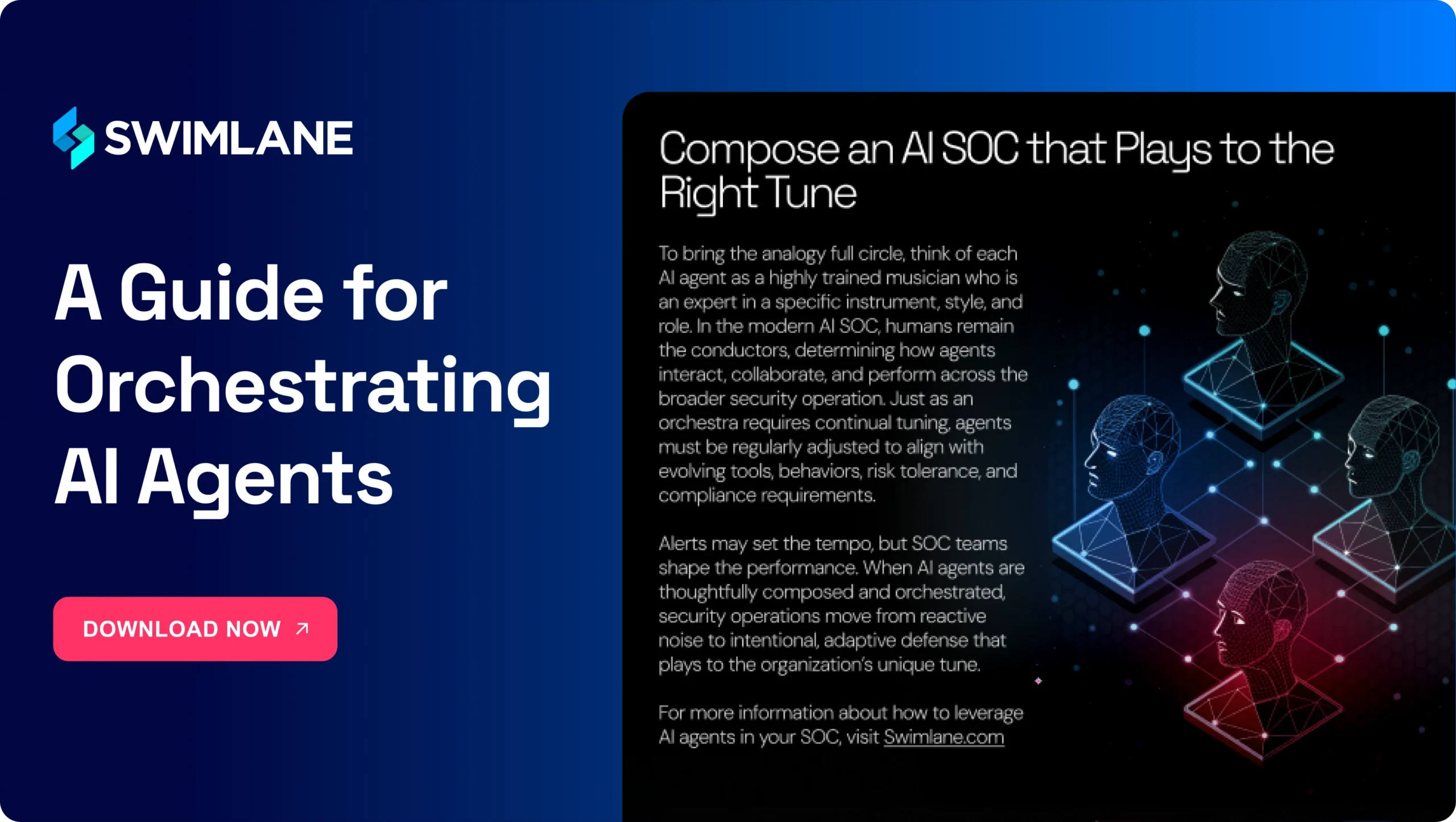
Explore how security teams can move beyond isolated AI deployments and build coordinated, scalable operations that reduce noise, improve cyber hygiene, and empower analysts to focus on higher-value work.

 English English
  Français
 Deutsch
 日本語
日本語
 한국어
한국어
 Português
 Español