
The AI + Automation Equation: Unlock Sustainable Security Outcomes
Read More

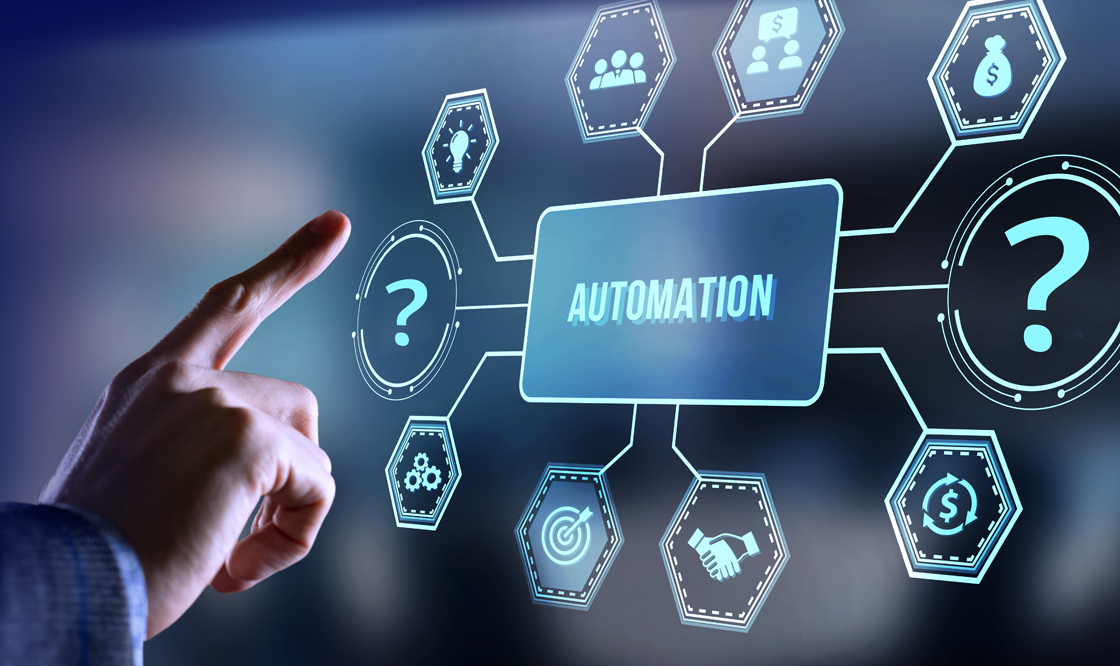
You aren’t just buying a tool — you’re hiring a digital analyst. And like any hire, the interview process matters.
As the security AI market floods with vendors making bold claims, the challenge has shifted from finding an AI automation solution to finding the right one. Deploying agentic AI in a security operations center isn’t a simple upgrade — it’s a fundamental shift in how your organization detects, responds, and scales its defenses.
But capabilities alone don’t determine success. The organizations that win are those that start with their desired business outcomes — risk reduction, operational efficiency, analyst enablement, and compliance readiness — and then pressure-test whether a vendor can actually deliver against them.
The questions below are designed to do exactly that: audit the intelligence, trustworthiness, and real-world fit of any AI automation vendor you’re evaluating.
In the past, automation success was tied to having a team of expert coders. That’s no longer the case. A modern AI solution should “level up” your existing team by handling complex logic and specialized knowledge. Look for a platform where junior analysts can perform at a senior level using natural language and AI-assisted reasoning. The goal is to make your team more effective immediately, regardless of their technical background in automation or scripting.
Assess whether the solution utilizes AI agents that can reason, plan, and execute multi-step investigations — and ask the vendor to demonstrate this live, not just describe it. Look for platforms where AI isn’t just a chatbot but an active participant that can enhance your organization’s security capabilities while keeping humans in the loop at critical decision checkpoints. If a vendor can’t show you autonomous multi-step reasoning in action, treat that as a red flag.
When delegating tasks to AI agents, trust is crucial. Ask if the vendor is ISO 42001 certified (the international standard for AI management systems) and how they handle your data at every step of a workflow. Your security data should remain private and secure — ensure the vendor has a legally binding “no-training” policy on your proprietary data. Go further and ask them to demonstrate data lineage transparency: where does your data go during an AI-assisted investigation, and who can access it?
Speed is everything in incident response. Ask if the platform provides AI-driven case management that automatically clusters related alerts, suppresses noise, and provides “one-click” remediation summaries. By distilling intricate datasets into a clear narrative, AI should reduce the time analysts spend swivel-chairing between tools, allowing them to move from detection to containment in minutes rather than hours. Critically, those remediation suggestions must also be traceable — analysts need to understand why the AI recommended a specific action, not just what it recommended.
It’s not about the sheer number of connectors; it’s about long-term adaptability. In a world where APIs change constantly, your automation solution must evolve alongside your environment. Ask vendors about their strategy for handling evolving APIs and emerging technologies — and specifically whether the platform’s low-code flexibility allows your own team to update and extend integrations without waiting on the vendor to deliver a fix.
Security is a collaborative effort that extends well beyond the SOC. Your agentic AI automation solution should summarize complex incidents in plain language for teams across the organization, from analysts to executive leadership. Ask whether dashboards and reporting are native to the platform or dependent on a third-party BI tool — because if your AI-driven findings live in one place and your reporting lives somewhere else, you’re still leaving critical gaps in visibility and accountability.
Buying an AI automation solution is a significant investment, and your leadership will expect to see measurable returns. Ask vendors how the platform captures and surfaces operational metrics — mean time to respond, analyst capacity, cases closed, compliance posture — and whether those metrics are tied to integrated case management and executive-ready dashboards. A platform that can’t demonstrate its own value over time will always be vulnerable to budget scrutiny.
Think beyond the Security Operations Center. A truly valuable agentic AI automation solution should be scalable, enabling you to deploy AI agents across IT, DevOps, and compliance as your organization grows. Assess whether the solution can handle increasing volumes of telemetry and agentic tasks without degrading performance or accuracy — and ask for customer references that demonstrate this scale in production environments, not just in a proof of concept.
Evaluating agentic AI automation solutions requires an approach that goes beyond surface-level metrics. By asking these critical questions, you can ensure you choose a solution that aligns with your unique needs, protects your data privacy, and contributes to the overall success of your cybersecurity strategy.
If you just started your AI automation journey, seek out thought leadership resources to gain insights and make informed decisions, ultimately driving success in your automation endeavors.
Evaluating an AI automation partner requires looking past the marketing buzz. Use these nine questions to separate truly agentic solutions from legacy tools with an AI “bolt-on”:
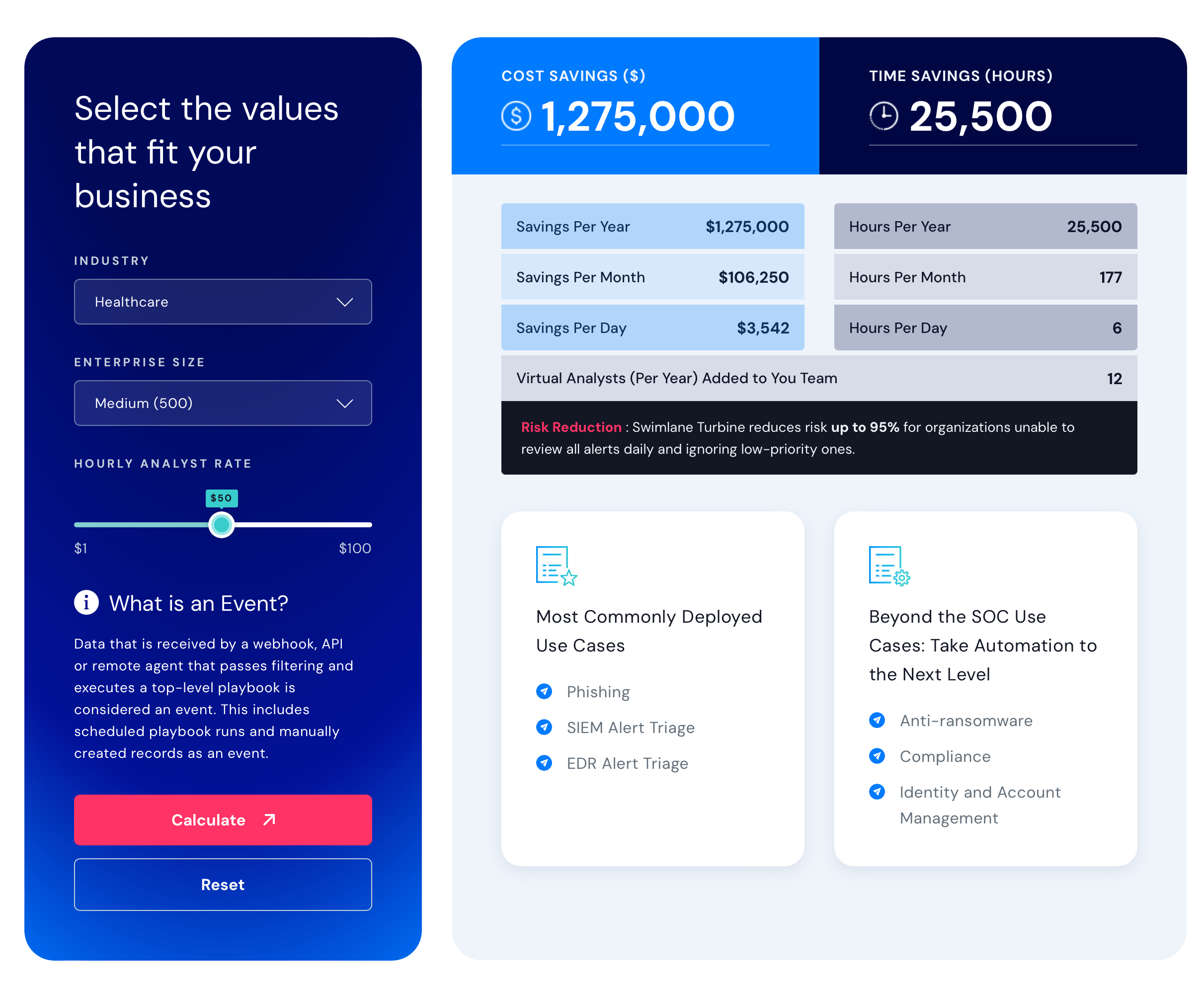
Estimate the savings you can achieve with Swimlane Turbine.

 English English
  Français
 Deutsch
 日本語
日本語
 한국어
한국어
 Português
 Español
