DemoVideo
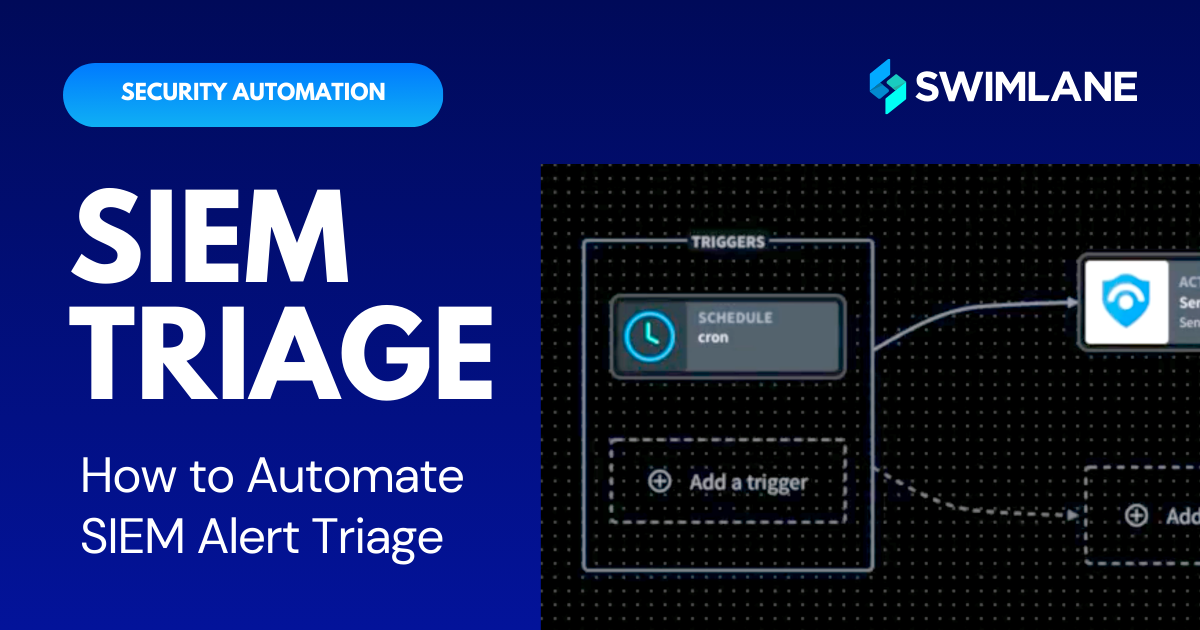
How To Automate SIEM Alert Triage
Read More


Security teams are overwhelmed by the volume of alerts from security information and event management (SIEM) tools. Threats can go unnoticed, leaving the organization vulnerable.
Swimlane Turbine ingests and enriches SIEM alerts in real time, correlates related activity, and prioritizes threats using security and business context. Automate routine triage and approved low-risk actions while keeping analysts in control of investigations, escalation, and response across any SIEM environment.
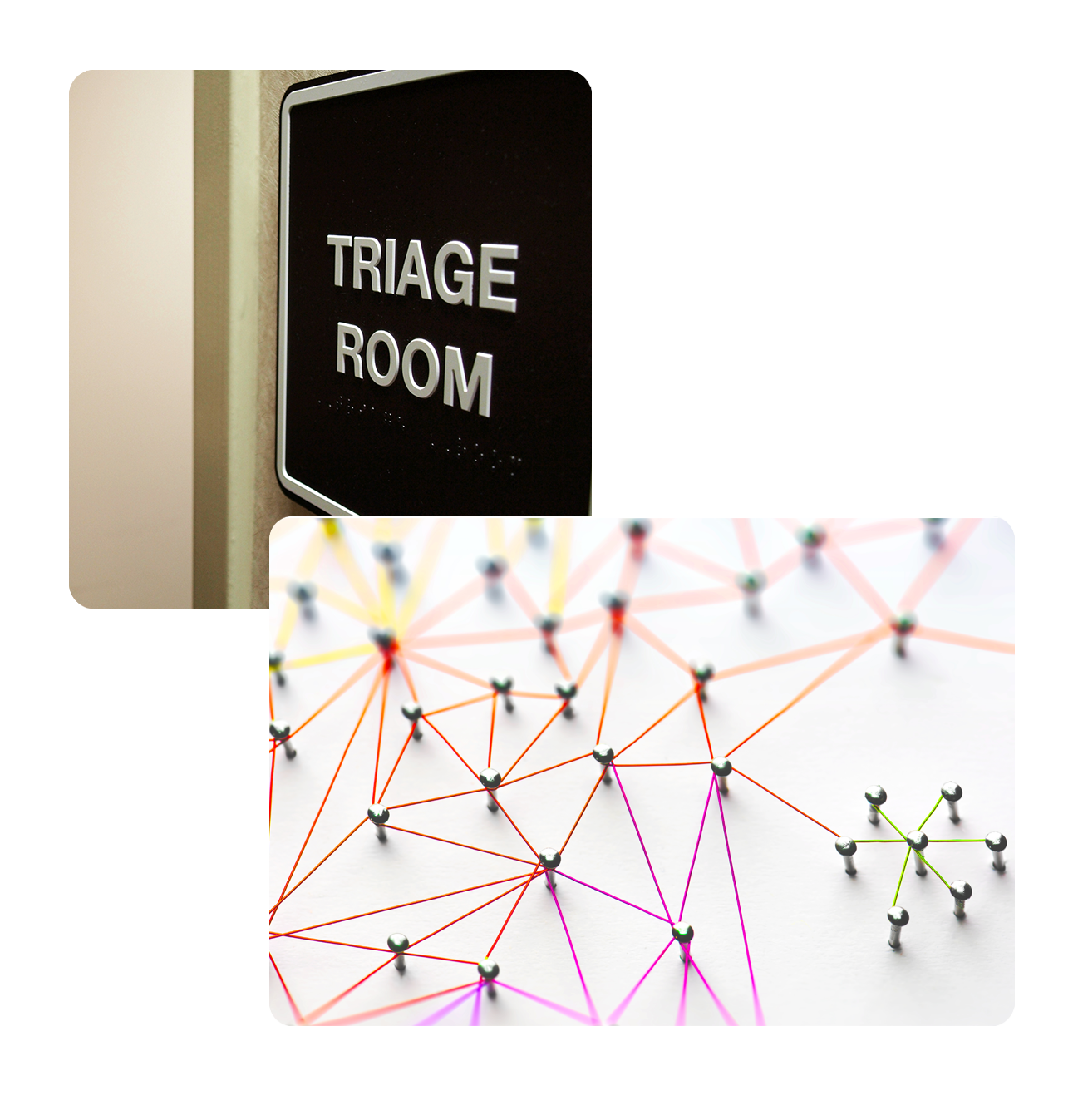
Security operations center (SOC) teams face as many as 150,000 alerts per day, many coming from the SIEM.
mins.
Swimlane customers say they save 14 minutes per alert by using automation to sift through SIEM noise.
%
NTT Data is 100% convinced that every customer operating a SIEM needs automation to survive.

Automated SIEM alert triage helps cut through false positives and focus on genuine threats. Swimlane correlates each alert with relevant case, asset, identity, endpoint, and threat intelligence data so teams can act earlier and with greater confidence.

Bring data from SIEM, EDR, XDR, identity, cloud, email, threat intelligence, ITSM, asset, and vulnerability tools into one triage record. Give analysts the context to review related activity, prior cases, decisions, approvals, and actions without switching between consoles.

Fully customizable and adaptable incident response playbooks help respond to credible threats faster, lowering mean time to detect and respond. Automate approved actions while keeping analysts in control of higher-impact decisions.

Take repetitive SIEM triage work off analysts’ plates, from gathering context and checking indicators to updating cases and routing alerts. Give teams more time for complex investigations while improving consistency and coverage during high-volume periods.

NTT Data serves a diverse portfolio of clients across industries like financial services, healthcare, retail, and manufacturing. While they all have unique requirements, the one constant is that their environments are constantly changing. Watch this video to learn why NTT Data chose Swimlane to help operationalize SIEM triage, among other use cases.

ProCircular experienced an immediate 60% increase in SOC efficiency when they began using automation
Abraxas increased intelligence by 5x by consolidating incidents across XDR and SIEM into a central system of record.
Softcat saw a 30% increase in customer acquisition after implementing Swimlane. SIEM alert triage was a foundational use case.


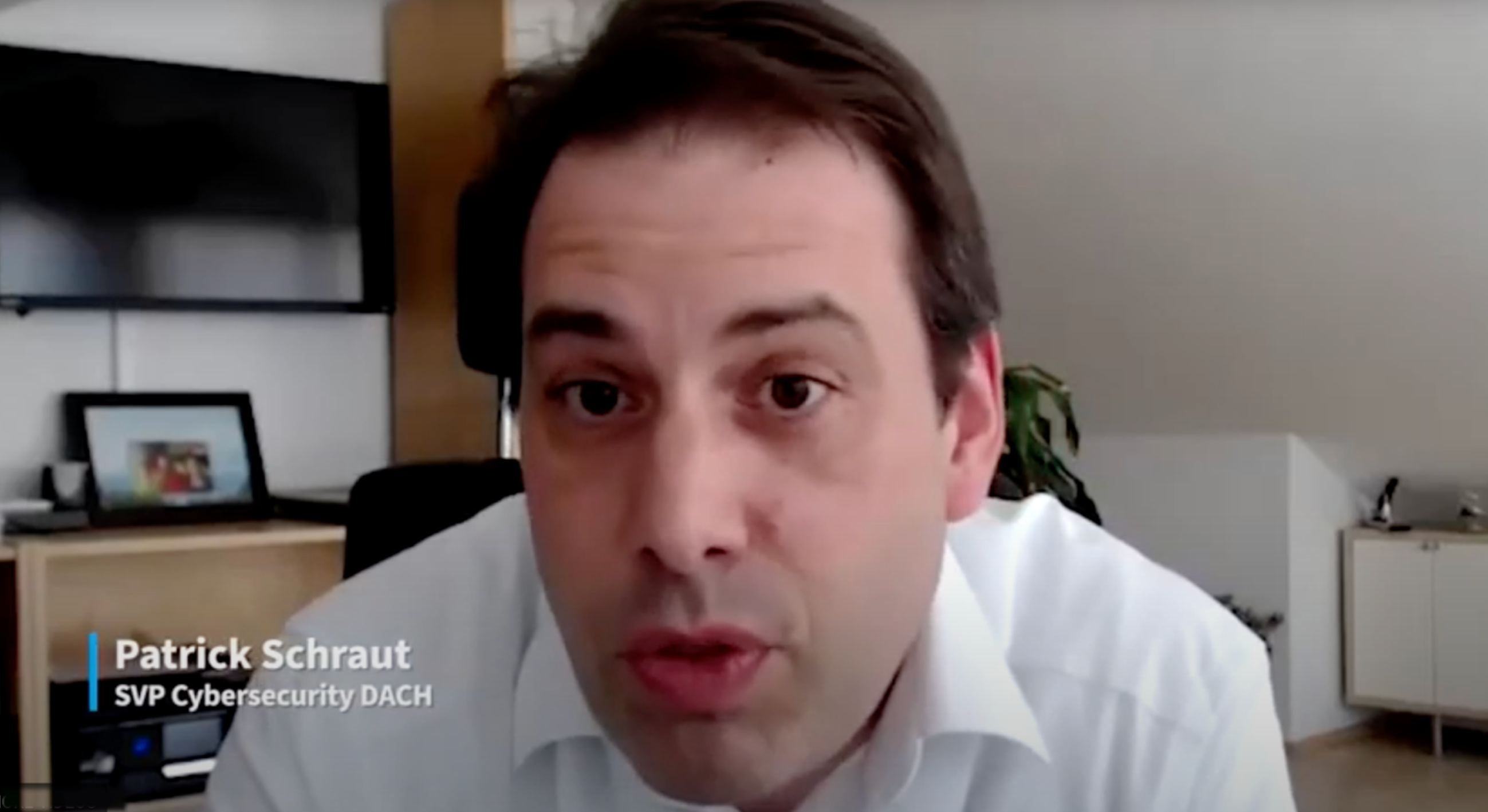
I’m 100% convinced that every customer that is operating a SIEM system, that’s operating a log management solution, a SOC whatsoever – if they want to survive, they need some kind of automation.
Patrick Schraut
SVP Cybersecurity



The ease of use and visual UX of Swimlane Turbine’s playbooks lowers the barrier of entry for analysts to be successful automators. We’ve seen that Tier 1 Analysts can build playbooks 2-3x faster than they can with other solutions. Turbine will enable us to spend more time on our customers instead of building or managing solutions.
Zach Tielking
Chief Cyber Forensicator
Automated SIEM alert triage ingests alerts, adds relevant context, connects related activity, and prioritizes each alert based on risk. It can then route the alert, create or update a case, and document the actions taken according to approved procedures.
Swimlane enriches alerts with threat intelligence, identity, endpoint, asset, and cloud data. It can also identify duplicates, connect related activity, and apply analyst-approved criteria before an alert is closed, deprioritized, or escalated.
No. Swimlane works with the existing SIEM to coordinate triage, investigation, case management, and response across the broader security stack. The SIEM continues to generate alerts while Swimlane helps teams determine and manage the next step.
Yes. Swimlane can execute pre-approved actions such as creating tickets, sending notifications, blocking malicious indicators, or isolating endpoints. Higher-impact actions can require analyst review and authorization before they are carried out.
Swimlane AI SOC also offers AI-assisted and fully agentic investigations, so that organizations can tune the platform's rules engine so that SIEM alerts are routed through playbooks or two levels of AI autonomy for investigation and response planning.
 English English
  Français
 Deutsch
 日本語
日本語
 한국어
한국어
 Português
 Español