
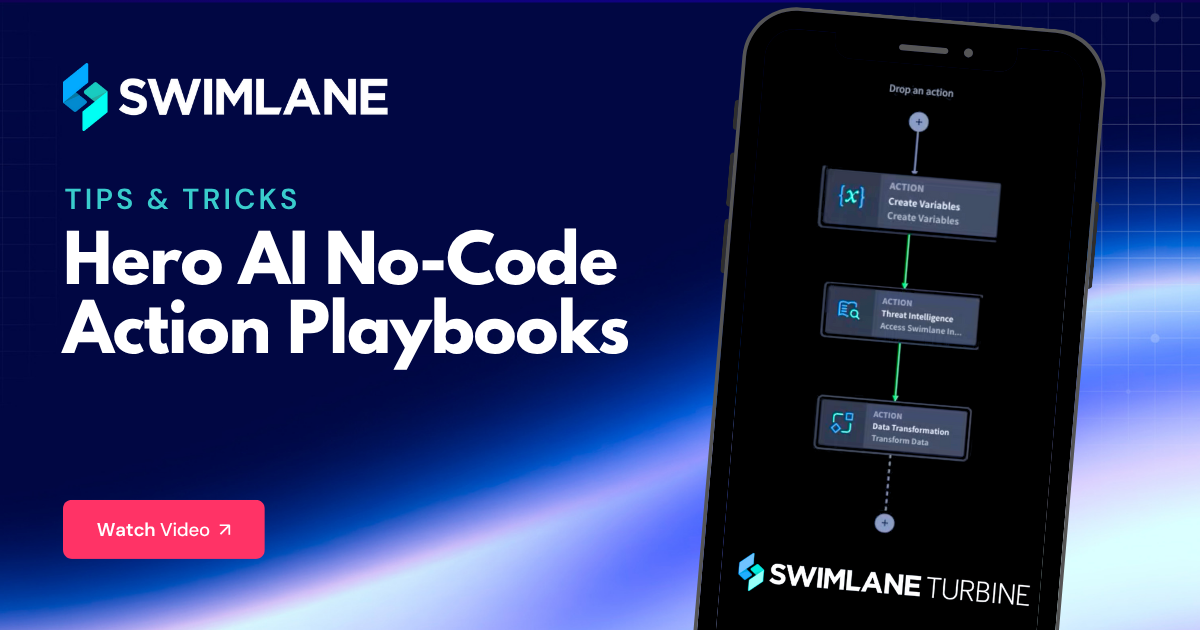
DemoVideo
Turbine Tips & Tricks: Hero AI No-Code Playbook Actions
Read More


Phishing is one of the world’s most common types of cybersecurity threats. Investigate suspicious emails faster, reduce manual work, and contain confirmed threats with Swimlane Turbine. Automatically extract and enrich indicators, correlate related activities, and route the appropriate response based on risk and analyst-defined controls in a single, consistent phishing remediation process.

Billion
Microsoft Threat Intelligence detected approximately 8.3B phishing threats in Q1 2026.
Anti-Phishing Working Group (APWG) recorded a 13.8% increase in phishing attacks in Q1 2026.
$
Billion
In 2025, business email compromise was the second-highest cybercrime category based on financial loss.

Most attacks begin within 43 minutes of a phishing email being opened, leaving little time for lengthy manual triage. Swimlane Turbine brings message details, threat intelligence, authentication results, and user context into a single investigation to help analysts make decisions and respond faster.
Turbine reduces false positives, resolves known-benign reports, and routes uncertain or high-risk cases for review. When phishing is confirmed, automation can help remove related messages, block malicious indicators, revoke sessions, and escalate affected users or endpoints.

Swimlane Turbine removes the manual handoffs, status updates, and follow-up tasks that slow phishing investigations. Agentic AI automation ensures reports move through a consistent process, with assignments, notifications, and case records updated as work progresses.
Analysts can spend less time managing routine activity and more time investigating complex threats, reviewing exceptions, and improving response procedures.

Automated playbooks help teams respond consistently and reduce phishing MTTR once a threat is confirmed. Swimlane Turbine coordinates actions across email, identity, endpoint, network, and case management tools.
Remove related emails, block malicious indicators, revoke sessions, reset credentials, and take action on affected accounts or endpoints. Route higher-impact steps for analyst approval before execution.

Use fully customizable dashboards and reports to show how phishing activity is evolving and where response efforts need attention. Track reported emails, confirmed threats, false positives, analyst touch time, and containment times.
Monitor recurring indicators, targeted users, campaign trends, and SLA performance to give analysts and executives a clearer view of phishing resilience.

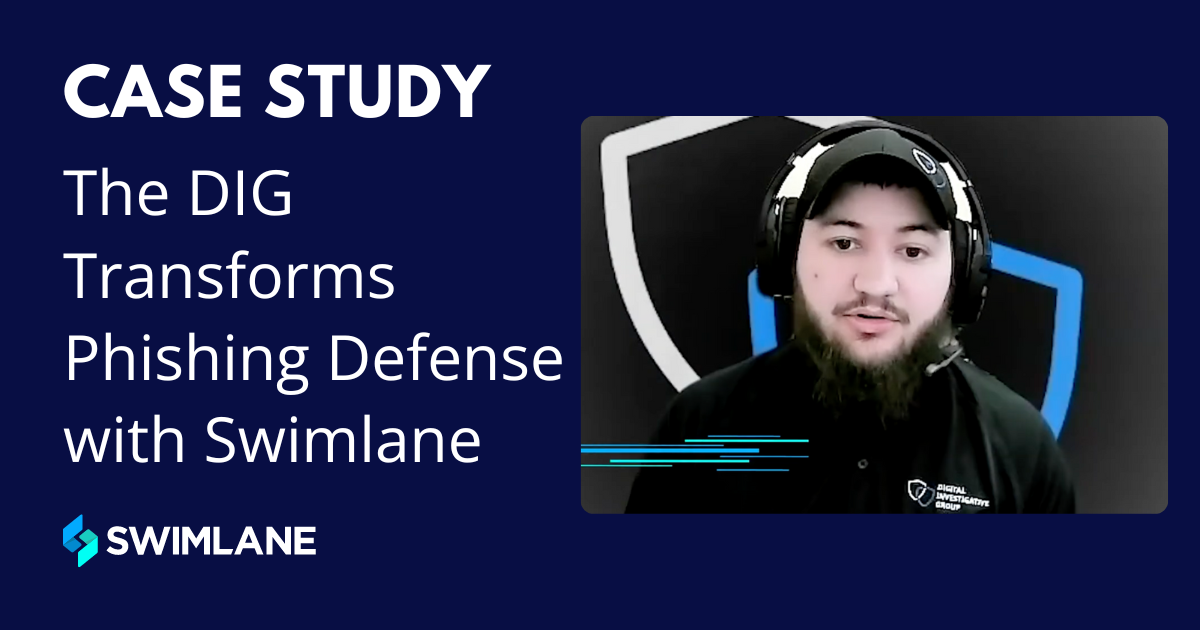
Don’t take our word for it. Swimlane customer, The Digital Investigative Group (DIG) is a managed security service provider (MSSP) that transformed their phishing defense with Swimlane. Phishing was the number one attack vector for the DIG’s customers, so it needed to be their first automation use case. Watch this customer testimonial video to hear from a peer.

SOC analysts are drowning in alert fatigue. By automating use cases such as phishing, which involve high frequency and high alert volumes, analysts regain valuable time.
Security automation detects telemetry, changes instantly when threats occur, and triggers a response at machine speed. With automation, you can dramatically improve your MTTR.
The security talent shortage is not going away. Alert fatigue from high-volume workflows, like phishing, is contributing to analyst burnout. Automate phishing workflows to retain and grow your SOC analyst.


To get solutions to help us process those phishing emails faster was the number one thing we needed inside automation. We found Swimlane to be one of the few products that actually allowed us a more versatile and custom build into automation.
Zach Tielking
Chief Cyber Forensicator

| Manual or Fragmented Triage | Phishing Triage with Swimlane | |
|---|---|---|
| Reports arrive through separate channels |  | Centralized intake reduces missed or delayed reports |
| Analysts extract indicators manually | | Automated extraction shortens the time to investigation |
| Reputation checks run across separate tools | | Parallel enrichment speeds up verdicts |
| Each report is reviewed in isolation | | Correlation reveals wider phishing campaigns faster |
| Verdicts can vary between analysts | | Approved criteria improve consistency and reduce rework |
| Response requires switching between consoles | | Coordinated actions reduce containment time |
| High-impact actions follow inconsistent review | | Built-in approvals improve control over critical actions |
| Evidence is documented after the fact | | Continuous documentation creates a complete investigation record |
| Reporting requires manual consolidation | | Dashboards make performance and response gaps easier to track |
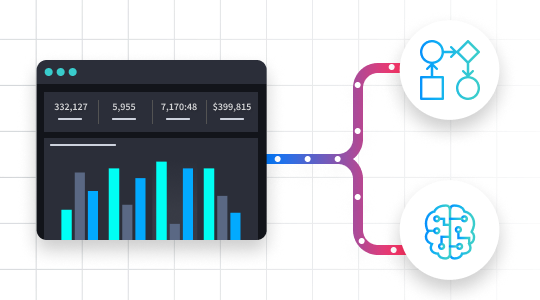
Swimlane Turbine’s pre-built phishing triage solution combines low-code playbooks, threat intelligence insights and case management applications into a complete end to end solution. Watch this demo to see how it works.
The world’s most capable security automation platform

Automated phishing triage takes a reported email, extracts the indicators that matter (headers, links, attachments, sender details, and authentication results), and enriches them with threat intelligence and case context. From there, it applies approved criteria to reach a verdict, coordinates the response, and records the outcome in a case. The strongest implementations don't force every report through the same process. They match the level of automation and AI to how much judgment each report actually needs, so analyst time goes to the reports that are genuinely ambiguous.
Swimlane parses the full message, including headers, links, attachments, sender details, and authentication results. It enriches that data with threat intelligence, reputation checks, user context, and the outcomes of prior investigations, then routes the report down one of three paths: deterministic automation for well-understood patterns, AI-assisted investigation where an analyst stays in control while Hero AI does the legwork, or a fully agentic investigation that reaches a verdict with zero manual configuration. As Swimlane validates outcomes, it codifies them into playbooks, so the next similar report resolves even faster.
Yes. Through supported email integrations and approved playbooks, Swimlane quarantines or removes malicious messages automatically once a case reaches a confident verdict. For higher-impact actions, Swimlane holds for analyst approval first, keeping a human in the loop without slowing down the reports that don't need one.
Swimlane connects to Microsoft 365, Google Workspace, secure email gateways, threat intelligence platforms, SIEM, EDR, XDR, identity, and ITSM tools out of the box. Swimlane Marketplace provides a list of all pre-built integrations and their connector actions. When a report touches a system without a pre-built connector, a data ingestion AI agent makes it easy to build a new integration on the fly.
 English English
  Français
 Deutsch
 日本語
日本語
 한국어
한국어
 Português
 Español