
The Art of Mastering AI SOC Orchestration
Read More


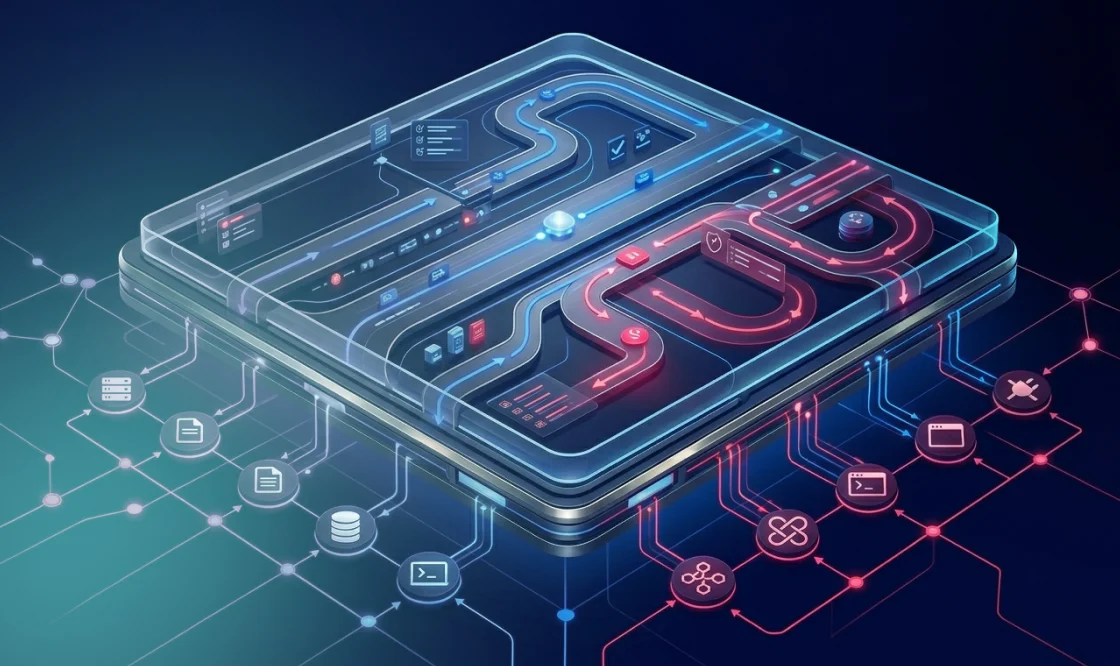
The hardest part of modern SecOps often begins after detection. An alert may identify suspicious activity, but resolution depends on how quickly the team can respond and take containment actions. They must gather context, validate risk, coordinate action, preserve evidence, and report the outcome. When those steps sit across disconnected systems, even strong detection programs leave analysts carrying too much executional weight.
The best AI SOC platform gives cyber teams a clearer path for handling alerts after detection. It coordinates triage, investigation, handling, response, and reporting across existing tools. For enterprise teams and MSSP operators, the right solution should make high-volume security work easier to manage without weakening control. Agentic execution, low-code playbooks, orchestration, incident management, and approval controls should work together so analysts keep authority over high-impact decisions while leaders gain measurable visibility into SOC performance.
Cyber teams invest heavily in detection. SIEM, EDR, IAM, email security, cloud security, vulnerability management, and threat intelligence platforms already generate valuable signals. Yet many teams still struggle after the alert appears.
An analyst may need to check identity background, endpoint activity, asset sensitivity, user history, related alerts, business impact, and containment options before deciding what to do next. Each step may sit inside a different system. Every handoff adds delay, and every manual update creates room for missed risk signals.
That gap explains why security leaders are now evaluating AI SOC platforms. The core problem no longer revolves only around finding suspicious activity. The larger challenge lies in moving each signal through the right action sequence quickly, consistently, and with enough governance for enterprise environments.
An AI SOC architecture coordinates cybersecurity activity, bringing investigation details, analyst decisions, approved actions, and reporting into one connected path. It applies artificial intelligence, process flow execution, and SOC orchestration to improve triage, investigation, response coordination, case handling, and reporting.
A mature platform does not remove the analyst from the loop. Instead, it reduces repetitive effort around evidence collection, enrichment, documentation, routing, and status updates. Analysts remain focused on judgment, escalation, risk interpretation, and approval of sensitive actions.
Pro Tip: Do not evaluate an AI SOC platform only in a demo environment. Use one real alert type from your SOC and trace every step it requires. That walkthrough will reveal whether the architecture truly coordinates activities or only improves isolated tasks.
Before comparing solutions, SOC leaders need to separate useful AI from decorative AI. The strongest enterprise AI SOC capabilities show up in the moments where data protection usually slows down, for example, investigation steps, handoffs, approvals, event updates, and reporting.
Agentic AI coordinates sequences of activities across systems while following policies, permissions, approval rules, and execution boundaries.
An AI agent usually performs bounded tasks, such as enriching an indicator, summarizing activity, or pulling supporting details inside the workflow. It may enrich an indicator, summarize an event timeline, review user details, draft an incident note, or query a specific system for supporting evidence. The agent operates within a defined scope and produces an output the investigation can use.
Agentic AI operates at the case flow level. It determines which task should happen next, coordinates multiple agents or actions, routes work through approvals, updates the incident record, and keeps the investigation moving through the approved path. In plain terms, AI agents act like task-level executors, while agentic AI functions as the orchestration logic that connects those tasks to events, escalations, judgements, and reporting.
For example, an identity alert may trigger separate task-level actions such as user context checks, device review, recent access analysis, and evidence preparation. Agentic AI then coordinates those outputs into the investigation path, updates the incident record, and prepares a recommended containment step. An analyst can review the evidence and approve any action that affects access before the operations proceed.
Low-code automation paths give SOC teams a practical way to define how work should move. Teams can map intake, enrichment, assignment, escalation, remediation, notification, and closure without rebuilding every action sequence through custom engineering.
Security processes change often. New tools enter the stack, approval paths shift, and compliance requirements mature. Escalation rules become more specific as leaders learn from past incidents. A rigid automation model slows the SOC down when operations need adjustment.
A strong automation sequence model allows reusable steps, controlled changes, and clear ownership. Teams should be able to refine the path without creating fragile scripts that only one person understands.
Risk investigations rarely stay inside one system. A suspicious login may require IAM data, EDR activity, SIEM correlation, asset data, ITSM records, and business owner input. Security orchestration connects tools, actions, records, and teams so defense activity moves through one coordinated action path.
A strong integration model brings the right data into the threat containment process and makes it usable through playbooks, native actions, and custom actions. SOC teams should test whether those pieces work together to route approvals, trigger approved steps, update records, and preserve evidence across a complete use case.
Case management is the center of any serious AI SOC evaluation. Alerts start the process, but events preserve the investigation.
A strong response workbench gives analysts one place to understand what happened, who owns the next step, and what still needs review. That clarity becomes critical during handoffs, escalations, audits, and leadership updates. When the incident background stays scattered across consoles, chat threads, notes, and tickets, the SOC loses continuity.
Modern incident handling connects directly to agentic tasks and playbooks. Evidence collected during the incident progression should flow directly into the case record. Approved actions, determinations, and review points should stay tied to the same investigation trail, so reporting reflects the work as it happened instead of forcing managers to reconstruct it later.
Enterprise teams need speed, but unchecked execution creates risk. Strong AI SOC architectures define what the system can do, who can approve actions, which tasks require review, and how teams inspect automated activity.
Governance covers role-based access, approval gates, exception handling, audit trails, change tracking, and policy controls. Cybersecurity leaders should know where machine-driven activity ends and human authority begins.
That boundary becomes especially important for actions such as account containment, mailbox remediation, endpoint isolation, access changes, or compliance evidence submission. The platform should route preparation and coordination quickly while keeping sensitive decisions controlled.
SOC leaders often need visibility into how work moves. That’s where reporting shows aging investigations, workload by category, bottlenecks, approval delays, alert volume, escalation patterns, and action gaps. For MSSPs, reporting also connects directly to SLA performance, client visibility, and service efficiency.
Useful reporting answers practical questions, like:
When SOC tools identify a signal, the outcome depends on everything that happens next. The SOC needs a practical way to manage the work, so risk validation, event history, ownership, policy checks, and documentation stay connected from the first alert through resolution. That activity cannot depend on disconnected architecture, analyst memory, or manual coordination at enterprise scale.
Swimlane Turbine gives cybersecurity teams the execution framework for that post-detection work. Agentic automation carries forward routine investigation steps. Low-code playbooks translate approved action paths into repeatable action paths. Orchestration connects the systems that hold critical context. Incident management keeps evidence, ownership, next steps, and mitigation activity tied to the same record. Dashboards and reporting turn resolution activity into visibility leaders can use.
The result is a SOC model where alerts follow a controlled action path through investigation, decision-making, and documented response.
For example, a cloud security alert may start with a suspicious configuration change, unusual access pattern, or risky workload activity. Swimlane can bring the right context into the incident handling sequence, such as asset details, identity activity, related alerts, and ownership information, then route the investigation through review, approval, response coordination, and reporting.
An identity investigation follows a different path. The workstream may gather user details, recent access activity, device background, and asset sensitivity before preparing the next containment step. If the action affects access, the analyst can review the evidence and approve the next steps before the containment activity proceeds.
A vulnerability action path may focus on coordination rather than containment. Swimlane can connect scanner findings with asset ownership, ticketing, remediation status, evidence capture, and leadership visibility, so teams can track progress without rebuilding updates manually.
That connected model gives teams more than faster task completion. It creates a cleaner execution trail from signal to resolution. Events hold the evidence, decisions, and approved actions. Reporting draws from the same response activity, giving leaders a clearer view of where operations move quickly, where it slows down, and which workstreams need refinement.
Swimlane’s Hero AI improves how teams create and refine response playbooks. Instead of starting every process from a blank canvas, security teams can use AI assistance to shape investigation steps, response logic, approval points, and documentation requirements based on how their SOC already works.
For enterprise teams, it matters because playbook design often slows automation programs. Analysts know the process, systems, and governance requirements, but turning that knowledge into repeatable automation can take time. Hero AI and Swimlane’s agentic capabilities shorten that gap by bringing AI into playbook creation, investigation support, and response execution while keeping the final operations under team control.
For example, teams can use agents to gather investigation inputs, summarize findings, recommend next steps, or help structure a response path. Those outputs can be fed into low-code playbooks where approvals, case updates, escalation rules, and reporting requirements stay visible. Swimlane also allows teams to bring AI agents directly into playbooks, making AI part of the operating sequence rather than a separate side tool.

Evaluate whether the solution can take a real investigation from initial signal to final reporting, coordinating evidence gathering, approvals, response steps, and documentation while keeping analysts in control.
Choose an operating path where manual effort already slows the team down, such as identity investigations, cloud alerts, vulnerability coordination, malware triage, compliance evidence requests, or high-volume phishing reports.
Identify which systems hold threat details, where analysts gather evidence, when a risk-event gets created, who approves sensitive actions, where remediation steps happen, and how leaders track status. That baseline reveals whether the platform can reduce performance drag in a meaningful way.
Ask the response engine to carry the execution path from signal intake to evidence collection, opening an investigation, ownership assignment, review, mitigation preparation, documentation, and reporting.
Look at whether agentic capabilities complete routine tasks, operational runbooks define the approved path, and case management keeps the investigation record intact. The key question is: did the platform push the response activity closer to a controlled next step?
Integration volume should not drive the evaluation on its own. Look at how each connector participates in operations across SIEM, EDR, IAM, cloud, email, ITSM, asset management, and vulnerability systems.
A useful integration should bring context into the investigation, update the incident record, create or modify tickets, route approvals, trigger approved actions, and preserve evidence without forcing analysts to move between environments manually.
SOC operations change as tools, escalation rules, policies, and business requirements change. A strong AI SOC architecture lets teams adjust runbooks without long development cycles. Low-code flexibility matters only when it keeps automation aligned with daily operations.
Case management should preserve the investigation as work happens. Evidence, containment activity, approvals, determinations, ownership, and response steps should stay connected in one record.
If managers still need to rebuild the story from tickets, notes, dashboards, and chat threads, the platform has not solved the handoff challenge.
Reporting should show how incident handling progresses, where it stalls, which tasks consume the most effort, and where process changes would improve consistency.
For CISOs, SOC leaders, and MSSP operators, an AI SOC should turn containment activity into a measurable view of operations, not just faster task completion.
Pro Tip: During evaluation, walk through the same execution sequence twice: once as designed, and once with an exception. Strong platforms should handle exceptions cleanly without breaking the defense action or forcing teams back into manual coordination.
The best AI SOC solution earns its place when daily security activity moves with less friction and more accountability. Analysts get the investigation details and operational structure needed to act with confidence, while leaders gain a clearer view of progress, bottlenecks, and execution quality across the SOC.
Enterprise teams and MSSP operators should choose based on case flow fit.
Swimlane Turbine fits this need by giving SecOps teams a practical foundation for connecting agentic execution, low-code playbook design, orchestration, incident management, and measurable SOC outcomes. Teams need cleaner coordination, governed action, fewer manual steps, and a more reliable path from alert to resolution.
Bring agentic execution, workflow control, and response continuity into one SOC operating layer with Swimlane. Book a demo now!

Swimlane Turbine gives security teams a structured way to advance investigations, coordinate approved actions, preserve case context, and turn SOC activity into measurable operational visibility.
An AI SOC improves SecOps by carrying routine investigation steps through a defined workflow sequence. It brings the right context into the risk-incident, keeps processes moving across teams and tools, and gives leaders a clearer view of progress, delays, and operational quality.
Case management preserves the full investigation record, including evidence, tasks, ownership, approvals, decisions, and response activity. Without strong incident flow, teams lose relevant details during handoffs, audits, and leadership reviews.
Enterprises should compare workflow depth, integration depth, governance, scalability, maintainability, and reporting. A focused proof of value gives stronger evidence than a generic product tour.
Swimlane Turbine combines agentic security automation, low-code playbooks, orchestration, case management, integrations, dashboards, and reporting. Enterprise security teams use Swimlane to coordinate SOC work across existing tools while maintaining governance and analyst control.

 English English
  Français
 Deutsch
 日本語
日本語
 한국어
한국어
 Português
 Español