
Phishing
Read More


If you’re a cybersecurity engineer, you know the feeling. You’re hired to hunt threats, harden infrastructure, and architect secure systems. But more often than not, you’re stuck in the “manual loop”: processing access requests, babysitting phishing tickets, and clicking buttons in a UI that keeps you trapped in a box.
Cameron Vincent, Cybersecurity Engineer at Metronet, knows this life well. Managing a vast, fiber-optic internet infrastructure requires a team that can move fast, but manual processes were threatening to grind his team’s momentum to a halt.
The following Q&A-style blog highlights how he moved past “button-pushing” and transformed his SOC into a platform for engineering innovation, driving operational efficiency.
Your team manages a vast network for a major Internet Service Provider. What was your operational reality before you implemented this level of automation?
It was a constant struggle with sustainability. Our environment is vast, and without automation, the sheer volume of manual hours required to maintain basic visibility and hygiene across our EDR, vulnerability management, and SIEM would have been impossible.
We were drowning in manual clicking and data entry. Every time a task came in, whether it was a phishing alert or a user provisioning request, it required someone to physically touch the keyboard and move data from one system to another. It wasn’t just tedious; it was a resource drain that kept us from looking at the bigger security picture.
Swimlane ingests alerts from all our tools: from EDR and vulnerability management to our SIEM, centralizing them into a single platform. My team, which has grown from four to nine, relies on it to capture the metrics we need. Without automation, the human hours required to maintain this level of visibility would be unsustainable.
Specifically, we use it for two major initiatives:
That was a huge win for us. Previously, a senior team member with deep networking expertise had to spend a minimum of six hours a week on manual clicking and data entry just to process new hires.
By automating this, we’ve reduced that task to about 10 minutes of light review. We’ve effectively removed the tedium from the process, allowing that engineer to focus on high-value analysis rather than administrative tasks.
The biggest differentiator is customization. If Swimlane doesn’t have a native connector for something we need, I don’t feel blocked. I can write a Python script or build it myself. With other tools, you often hit a “wall” where you can only do what the platform explicitly allows. Swimlane doesn’t put you in a box. It provides a bridge between being a beginner building playbooks and an expert deploying complex custom scripts.
It’s been incredibly smooth. Our transition was unique because we were in the middle of an acquisition while migrating, so we had to move deliberately. A huge shout-out to the Director of Customer Experience, who single-handedly helped us move our phishing triage workflows into Turbine and showed us features we didn’t even know we needed.
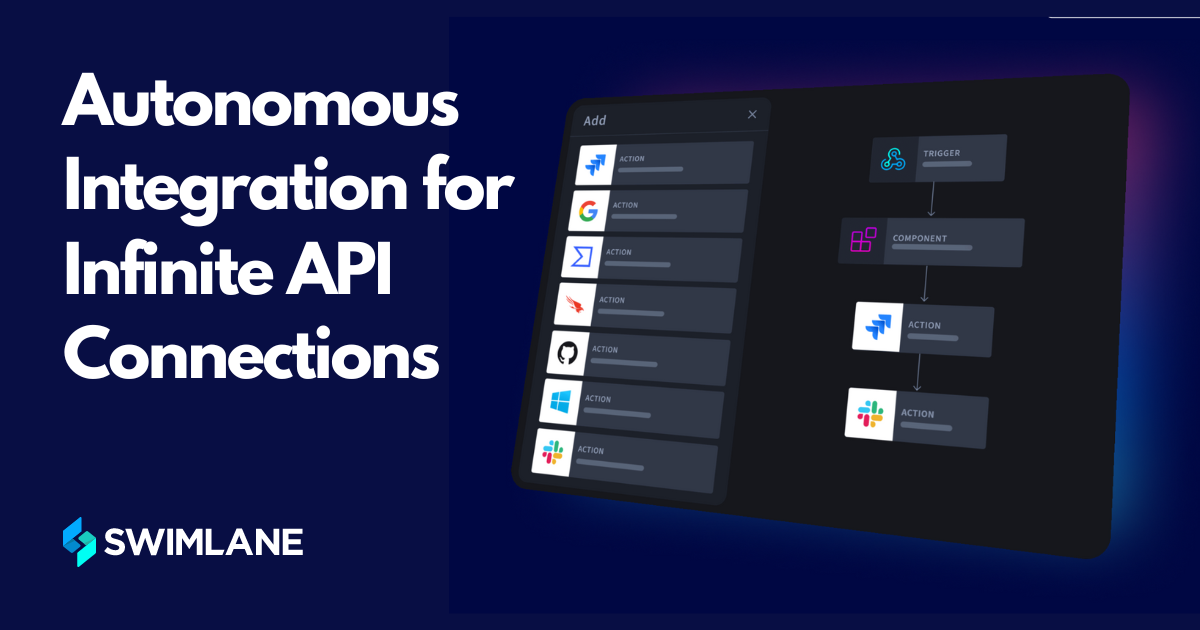
It’s a tie between Turbine Canvas and autonomous integrations. Swimlan Canvas playbook builder is very intuitive, even team members who aren’t “coding savvy” building out playbooks.
They can give me the foundation, and I only help them with the complex logic. The number of integrations available in the Swimlane Marketplace makes integrations feel seamless.
I’m generally cautious about AI because it’s an emerging technology with potential vulnerabilities. When I look at AI, I’m not looking for a “magic button.” Unlike some of the other tools we’re pressured to use, I’m looking for three things: trust, data locality, and measurable utility. Our data is already in Swimlane, and we have an established, trusted relationship with your team. I’m currently looking at how we can use Hero AI to further reduce the manual tasks required for phishing triage by training it on our existing, trusted data. For me, it’s not about hype; it’s about reducing the noise using the data we already own.
Absolutely. If you want to automate securely, quickly, and frequently, you need a platform that doesn’t just work today but won’t break tomorrow. Whether you’re just starting to explore automation or you’re an expert looking to build custom, complex workflows, Swimlane offers the flexibility to get it done.

Whether you are looking to mitigate SOC alert fatigue, streamline incident response, or automate repetitive administrative tasks like new hire onboarding, Swimlane Turbine is built to scale with your business.

 English English
  Français
 Deutsch
 日本語
日本語
 한국어
한국어
 Português
 Español