
A Guide to Orchestrating End-to-End Investigations with AI
Read More


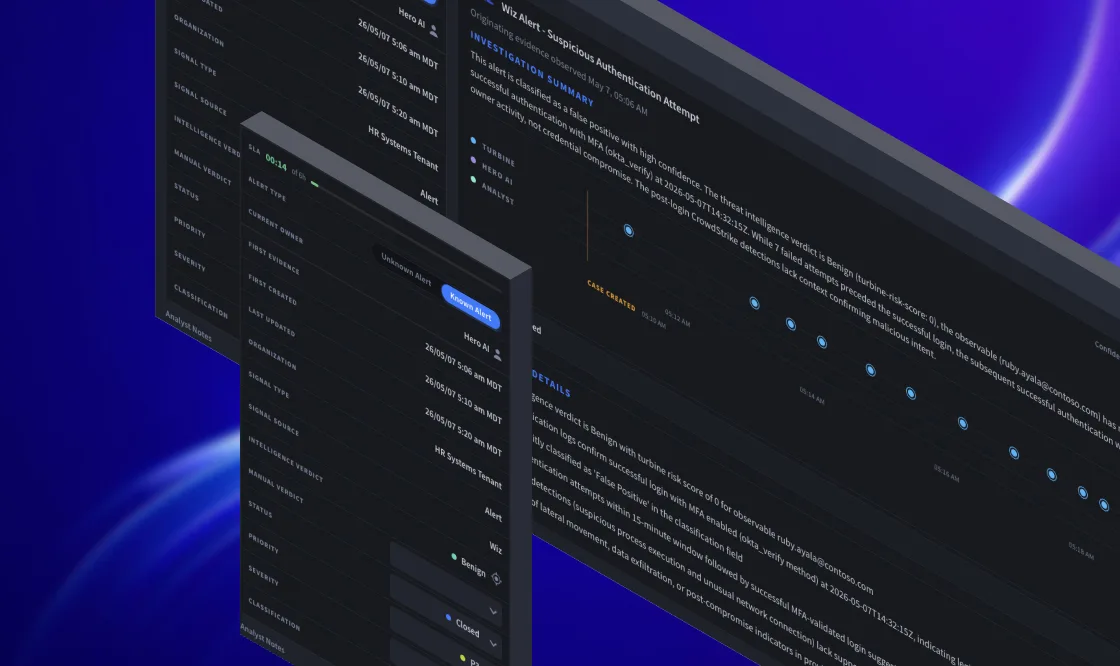
When a CISO asks, “What happened, who handled it, what did we do, and can we prove it?”, the answer should not require analysts to search across tickets, chat threads, screenshots, and disconnected tool logs.
SecOps case management gives SOC teams a structured way to answer those questions during the investigation, not after the fact. Each incident brings together the alert, evidence, ownership, decisions, review points, handling steps, and final outcome in a single operational record. For SOC leaders, that structure gives analysts clearer direction, keeps ownership visible, and shows where containment moves smoothly or slows down.
AI SOC response orchestration adds intelligence and automation to that operating model. With Swimlane Turbine, agentic AI can analyze context from existing tools, generate assessment plans, guide analysts through approved workflows, and coordinate resolution actions through low-code playbooks and enterprise-scale orchestration.
Security case management organizes handling into a controlled record that analysts can use from first validation to resolution. Rather than treating an alert as a standalone item, the SOC turns it into a managed process with supporting details, assigned actions, decision history, and a clear path to closure.
A well-built operational record should answer the questions analysts and SOC leaders ask while the process is still in motion:
Swimlane Turbine operationalizes this process by connecting remediation activity with agentic AI automation and orchestration. Analysts can pull information from SIEM, EDR, identity, cloud, email security, and ITSM tools into the threat evaluation record. Low-code playbooks then route tasks, manage risk evaluation points, and trigger authorized steps across the cybersecurity stack.
The real test of a record comes during the handoff, when another analyst, manager, or response owner needs to understand the process flow without starting over. In a real assessment, one alert can quickly involve identity logs, endpoint evidence, cloud activity, user history, IT tickets, and management approval. A suspicious login, for example, may look simple at intake but require several teams and systems before the SOC can decide whether to contain, escalate, or close the case.
A robust mitigation orchestration gives the SOC a steadier way to manage these moving parts. Analysts get the context they need before assessing risk, while escalations reach the right team with enough background to act quickly. Key decisions stay tied to the assessment instead of getting buried in chat threads or personal notes. Leaders can also see where cases progress through triage, approval, and mitigation as expected, and where extra handoffs or delays need attention. Reporting becomes easier because the record is created as the work happens.
That operating layer depends on the quality of detail captured inside each case. The record must do more than hold updates. It needs to preserve the facts, decisions, ownership, and resolution history that analysts and leaders rely on as the remediation moves forward.
Pro Tip: A good handoff should not require a second explanation. Keep the incident record detailed enough for the next owner to understand what happened, what was checked, and what action is needed.
A cybersecurity event should function as a complete triage timeline, not a scattered set of notes. Anyone validating it should be able to understand the scope, status, evidence, assigned work, and required decisions without relying on memory or side conversations.
A complete event trail should include:
Swimlane Turbine makes this structure operational rather than static. In phishing handling, analysts may need email headers, sender reputation, URL analysis, mailbox search results, endpoint activity, user response, containment approval, and remediation tasks.
Turbine can connect those details with the workflow itself, so the operational sequence shows what the SOC found and what the team did with that information.
Every assessment reaches a decision point where the SOC needs a clear next step, enough context to support that decision, and the right level of oversight before action begins. Instead of moving an event through a fixed checklist, the lifecycle reduces uncertainty, assigns ownership, applies the right controls, and preserves the details the next person needs to continue the operations.
Swimlane Turbine supports this lifecycle with agentic AI, low-code playbooks, orchestration across connected tools delivered through a unified analyst workbench. The platform can surface the right details and keep resolution activity tied to the working record.
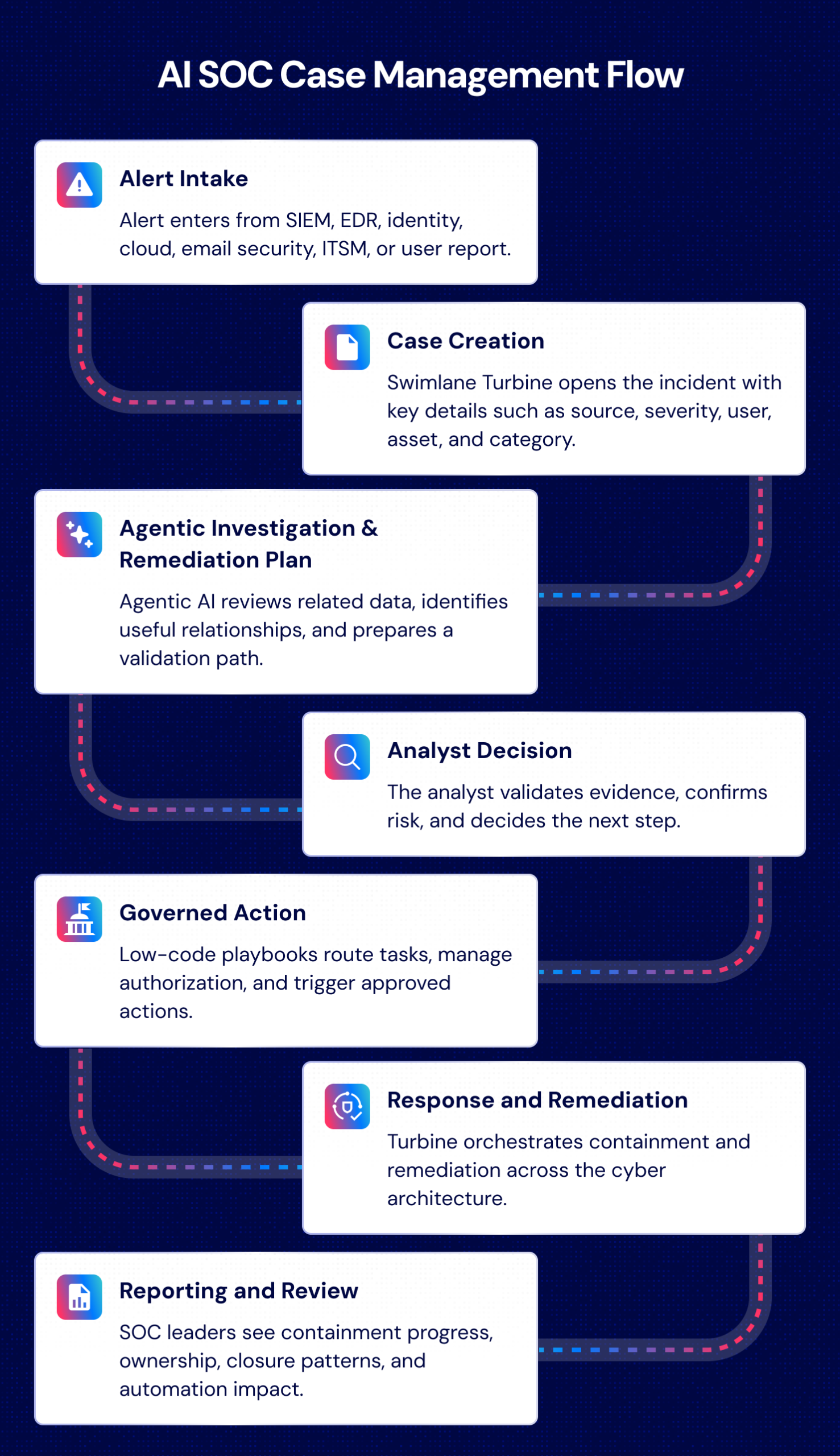
Intake begins when an alert, user report, monitoring event, or service request enters the SOC. The incident should open with enough starting detail to determine where the activity belongs and how urgently it needs review.
Useful intake details may include the alert source, timestamp, severity, affected user, impacted asset, category, and originating tool. Turbine automates alert escalation from connected systems and routes new actions to the right queue, workflow, or owner.
Enrichment adds the information analysts need before judging risk. Identity activity, asset criticality, endpoint status, vulnerability exposure, threat intelligence, cloud activity, email details, and prior event history can all change how the SOC interprets an alert.
Agentic AI analyzes data across multiple systems and identifies useful relationships across users, assets, alerts, and behaviors. That background gives analysts a stronger starting point before deciding whether the threat requires escalation, containment, or closure.
Triage turns available information into a decision path. Analysts assess severity, confidence level, potential impact, affected systems, and escalation requirements.
Turbine supports triage through low-code playbooks that reflect internal SOC policies. Agentic AI can also draft a containment plan based on the threat type, available evidence, internal procedures, and accepted cybersecurity practices, while analysts retain judgment and approval.
Investigation tests the initial assessment against evidence. A phishing incident may require sender validation, URL analysis, mailbox search, and endpoint checks. A suspicious login may require identity analysis, access history, location analysis, and session activity. An endpoint action may require assessment of process, file, and network behavior.
Turbine coordinates these checks across the existing infrastructure. Agentic AI recommends the next check, identifies missing information, and keeps the analyst aligned with approved workflows without forcing every action through the same path.
Some mitigation actions need validation because they can affect users, systems, operations, or business risk. Endpoint isolation, account disablement, token revocation, broad domain blocking, legal involvement, and compliance notification all require clear control.
Turbine keeps review points tied to the incident so the SOC can see who validated the decision, why the action was taken, and which control governed the remediation
Response should follow the evidence. The team may isolate a device, reset credentials, revoke access, clean up mailboxes, update firewall rules, create IT tickets, assign patching work, or notify affected users.
Turbine orchestrates these steps across tools and teams, so mitigation work stays grounded in the findings that justified it. Analysts avoid fragmented follow-up, and leaders gain a clearer view of completed actions, open tasks, and cross-team dependencies.
Closure confirms the final classification, completed actions, unresolved follow-up items, and the outcome. Review turns the finished activity into insight the SOC can use to improve workflows.
SOC leaders can evaluate case aging, escalation paths, workload, operational delays, approval patterns, and the impact of automation. Turbine’s reporting capabilities help teams identify where workflows perform well and where manual effort, routing gaps, or repeated delays need attention.
By the time an event closes, the SOC should know which steps added value, which handoffs created drag, which decisions required oversight, and which repeated tasks are ready for automation. Governed operations turn everyday activities into a leadership view.
Key benefits include:
Analysts feel the quality of incident management in the first few minutes of evaluation. A well-designed workflow can either give them a clear path forward or leave them piecing together information across tools before they know what to do next. The first review often decides the quality of the entire assessment. Analysts need to understand whether the alert deserves attention, which evidence matters, and what path the event should follow before remediation begins.
AI SOC threat management can reduce that early uncertainty. Instead of asking analysts to manually gather every detail before they can make progress, agentic AI can evaluate related data, identify relevant relationships, and prepare a working triage path. For example, in a suspicious login case, AI can help compare identity activity, asset details, location changes, session behavior, recent alerts, and known business context before the analyst decides whether to escalate.
For analysts, that creates a clearer path through complex actions and helps them focus on decisions that require human expertise.
Pro Tip: Use agentic AI to prepare the first pass, not replace analyst judgment. Let AI organize the evidence, suggest a triage path, and flag missing details so analysts can spend more time validating risk and making the right decision.
AI SOC teams need incident response to become the point where investigation quality, human judgment, automation, and accountability meet. Alerts may start the sequence, but the incident determines whether the SOC can understand the situation, involve the right people, apply the right controls, and explain the outcome with confidence.
Agentic AI raises the standard for containment discipline. AI can speed up analysis and guide the next step, but the process still needs to show what information shaped the decision, where approval belonged, and how the response was carried out. Without that structure, automation can create speed without enough operational discipline.
Swimlane Turbine gives AI SOC teams a policy-led workflow built for enterprise-scale automation and orchestration. With agentic AI, low-code playbooks, approval controls, integrated tool actions, and reporting, Swimlane helps the SOC turn incident tracking into the control layer for triage and mitigation.
Move security incident orchestration from passive documentation to controlled AI SOC orchestration with Swimlane Turbine.
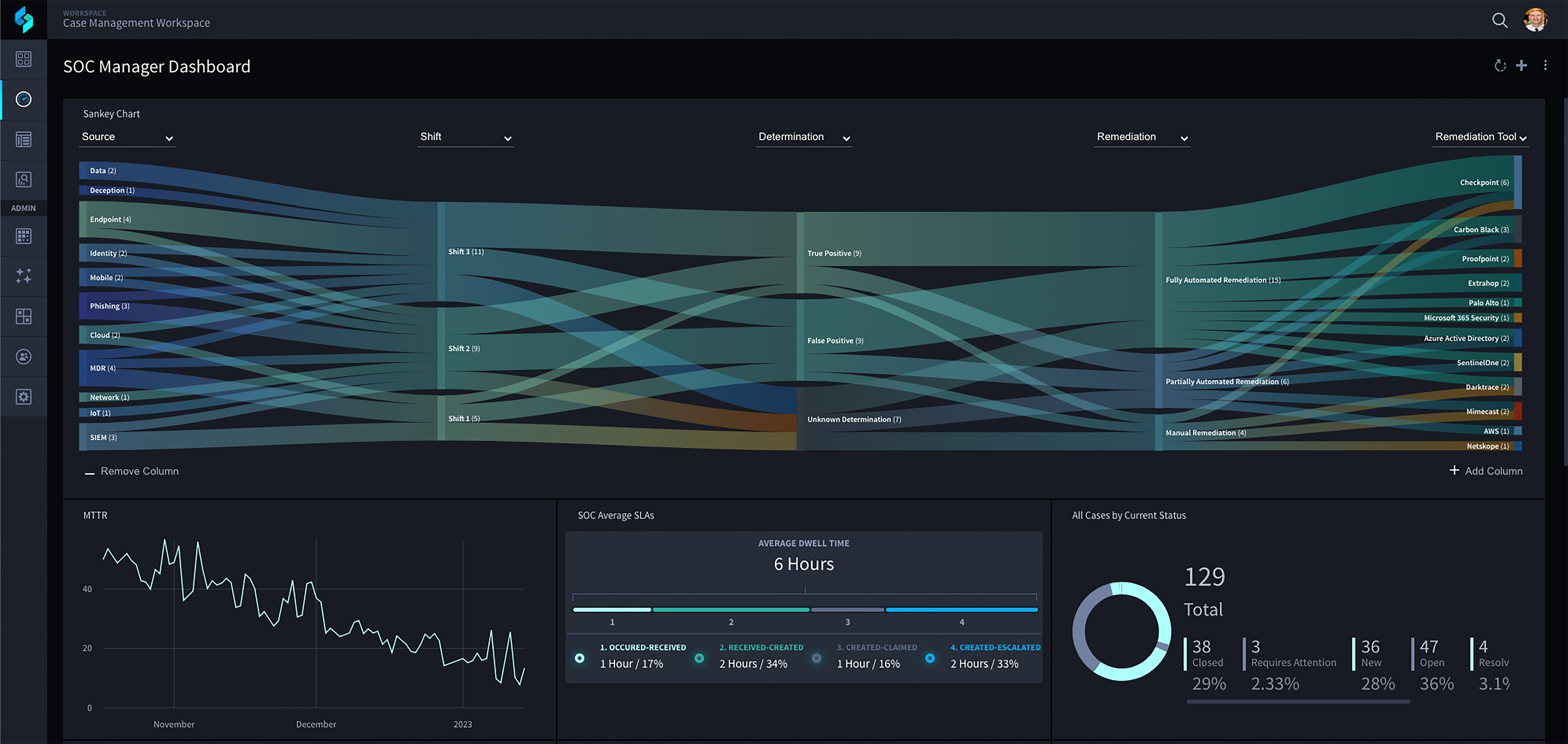
Swimlane Turbine gives AI SOC teams a unified workbench for all human and AI decisions, built on the platform’s dynamic case management application. Agentic AI enriches context at intake; low-code playbooks with embedded AI agents route approvals and containment steps; and audit trails keep the full decision history intact from initial review through containment.
Security case management gives SOC teams a structured way to manage containment from alert intake through closure. Each case captures evidence, ownership, tasks, approvals, response actions, and final outcomes.
Security case management improves the consistency of mitigation, ownership, collaboration, documentation, and reporting. Teams also gain better visibility into where cases slow down and which workflows need refinement.
AI SOC case management uses AI to analyze data from different systems, generate investigation plans, guide analysts through approved workflows, and summarize case progress. Human review remains important before higher-impact response actions proceed.
Agentic AI can compare evidence across tools, identify relevant relationships, recommend next checks, and align validation steps with SOC policies. That guidance helps analysts move through complex cases with more structure and less manual research.

 English English
  Français
 Deutsch
 日本語
日本語
 한국어
한국어
 Português
 Español