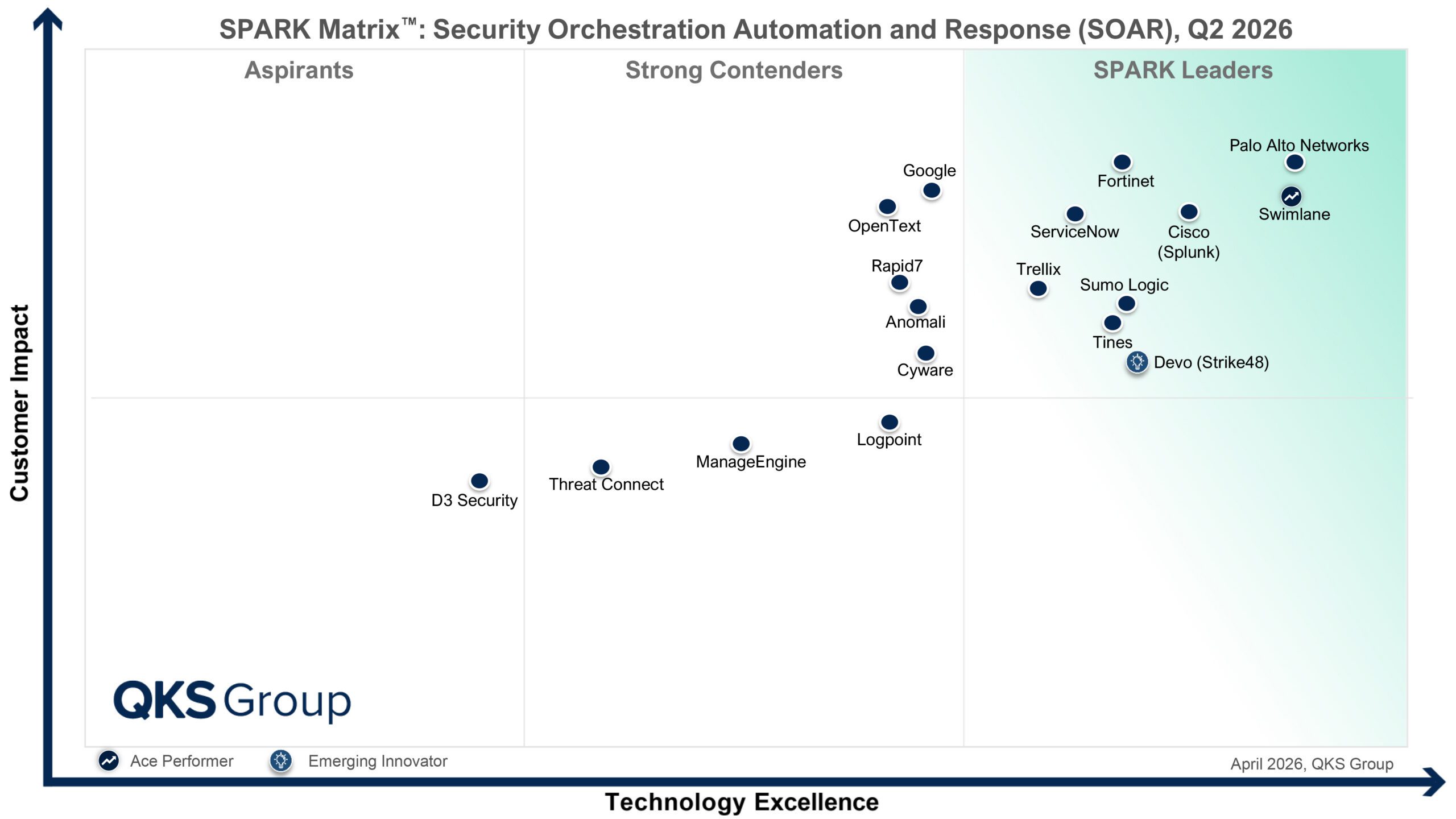

Where’s the SOAR Magic Quadrant?
Read More


Think back to how your security orchestration automation and response (SOAR) platform ended up in your stack. Was it a deliberate decision, the result of a thorough evaluation against your specific needs? Or did it simply arrive as part of a bigger purchase?
For many security teams, the honest answer is the second one. The SOAR wasn’t selected. It came along for the ride.
That distinction matters more than it first appears. Security automation shapes how your analysts work every single day. It determines how quickly you respond, how much you can scale, and how well your tools communicate with one another. A platform that important deserves to be chosen on its own merits. Yet for many teams, it never was.
The path is familiar. A vendor pitches a broader platform: SIEM, threat intel, endpoint, maybe a managed service layer. SOAR is in there too, folded into the platform. The procurement team sees a cleaner contract and fewer vendors to manage. The deal makes sense on paper. So the box gets checked. The SOAR comes with it.
Nobody sat down and asked whether that specific automation engine was the best fit for the environment. Nobody ran it against the alternatives. The decision was about the bundle, and the SOAR was a passenger.
This isn’t a knock on the engineering behind these tools. Palo Alto XSOAR, Splunk SOAR, and FortiSOAR are all capable products built by serious teams, but the truth is, while these SOAR platforms were great in their day, they haven’t been innovated on in years and are no longer built to keep pace with today’s threats.
Every bundle is a series of compromises that you never explicitly agreed to. They don’t appear in the pitch deck. They show up later, in the day-to-day work of running operations. Inherited fit. When SOAR is part of a larger deal, it’s optimized for the vendor’s sale, not your specific workflows. You adapt to the tool rather than the tool adapting to you. Over time, your team builds processes around its limits and comes to treat those limits as normal.
A bundled SOAR is engineered to deepen your relationship with the parent platform. It integrates beautifully into that vendor’s ecosystem and gets noticeably stiffer elsewhere. The integrations the vendor promotes tend to be the ones that sell more of their own stack. But no real security operation runs on a single vendor. Most environments pull from a dozen sources, and a SOAR that favors one of them treats the rest as an afterthought.
Changes that should take an afternoon can require a specialist. Updates move on the vendor’s timeline, not yours. The automation you most want to build is sometimes the automation the platform makes hardest. None of this is dramatic. It’s a slow tax on your team’s time and ambition.
Here’s the part that rarely gets discussed at signing. Every playbook you build inside a closed ecosystem makes leaving harder. Each integration, each workflow, each dependency raises the cost of ever-changing your mind. The bundle is comfortable to adopt. That comfort is the strategy. The real question isn’t how easy it was to start. It’s how trapped you’ll feel three years from now.
Bundling solves a procurement problem. It simplifies vendor management and tidies up the contract. Those are genuine benefits, and they’re worth something.
But procurement convenience and operational reality are two different things. The decision that makes a renewal easier in the boardroom can make life harder in the SOC. Your analysts are the ones who feel the gap between what was bought and what they actually need.
This is how “good enough” automation quietly caps a team’s ceiling. The bundled tool isn’t broken. It works just well enough that nobody questions it. Meanwhile, your team builds workarounds, accepts constraints as facts of life, and slowly forgets what a platform built around them could actually do.
The question worth asking
You don’t need to declare your current SOAR a mistake. You just need to ask one honest question at your next renewal…
If this tool weren’t bundled, would you still choose it?
If the answer comes quickly and confidently, you’re in a good spot. Stay where you are. But if you hesitate, that hesitation is telling you something. It means the decision was made for you, and it may be worth making again, this time on your own terms and against your own needs.
A few questions can help you get there:
This is where Swimlane Turbine comes in, and why we think differently about the problem.
Turbine is vendor-agnostic by design. It wasn’t built to reinforce one ecosystem or to nudge you toward buying more of a single vendor’s products. It was built to orchestrate your environment as it actually exists: mixed, evolving, and full of tools from many sources. Your automation follows your stack, not a vendor’s roadmap.
That openness is the whole point. When your automation approach isn’t tied to one platform, you get to keep your options open, adapt quickly, and orchestrate across everything you run instead of just the approved parts.
And if you’re worried that switching means rebuilding everything you’ve already created, that’s a fair concern, and it’s one we’ve solved. Swimlane migrates the vast majority of your existing workflows automatically, and handles the rest with you. The painful part is largely handled before you begin, so changing your mind doesn’t mean starting over.
You chose your SIEM. You chose your endpoint tools. You should get to choose how your environment is orchestrated too, on its merits, for your environment, on your terms.
So ask yourself the honest question. Then decide what your team really deserves.
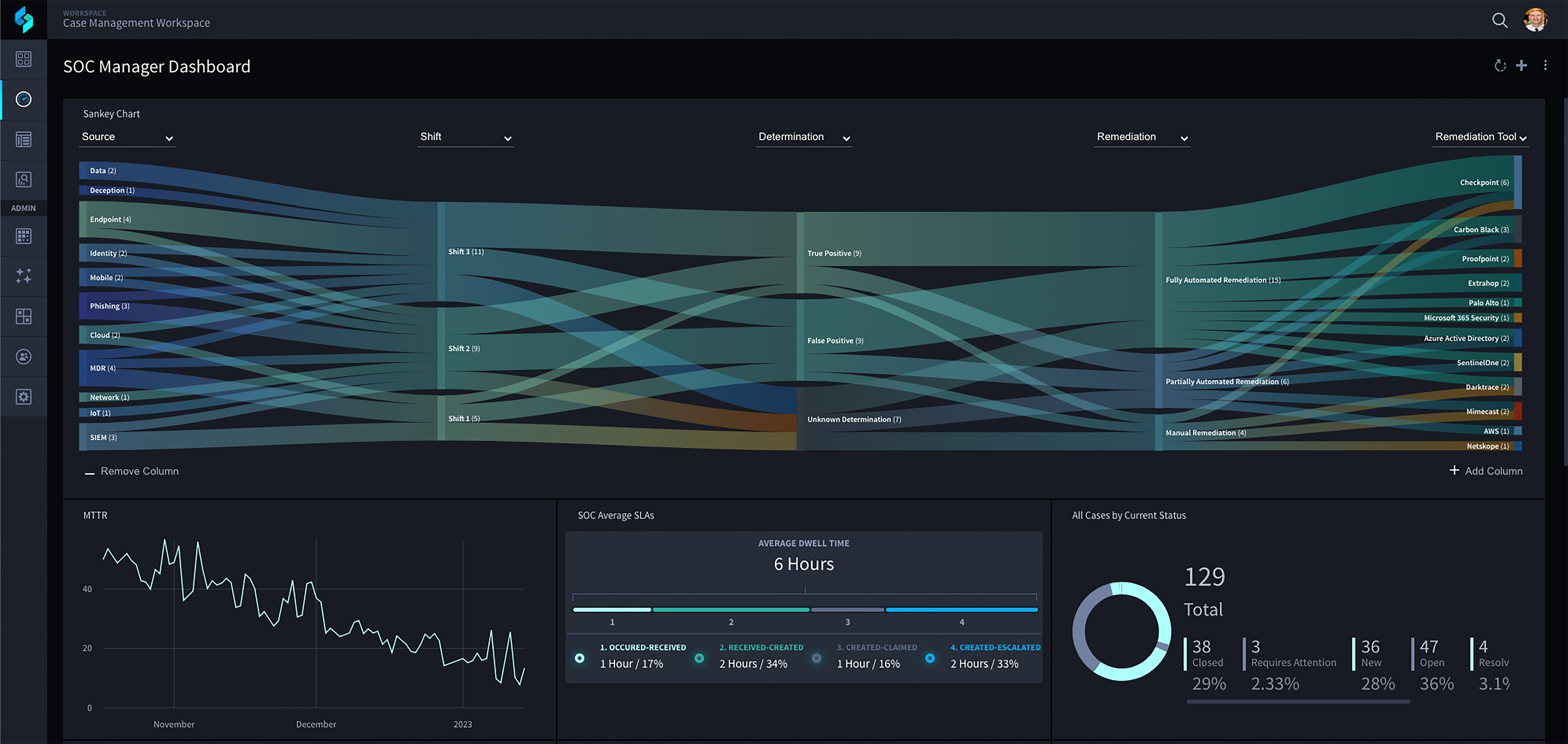
See how Swimlane helps teams replace legacy SOAR constraints with agentic AI automation built for the way modern security operations actually work.

 English English
  Français
 Deutsch
 日本語
日本語
 한국어
한국어
 Português
 Español